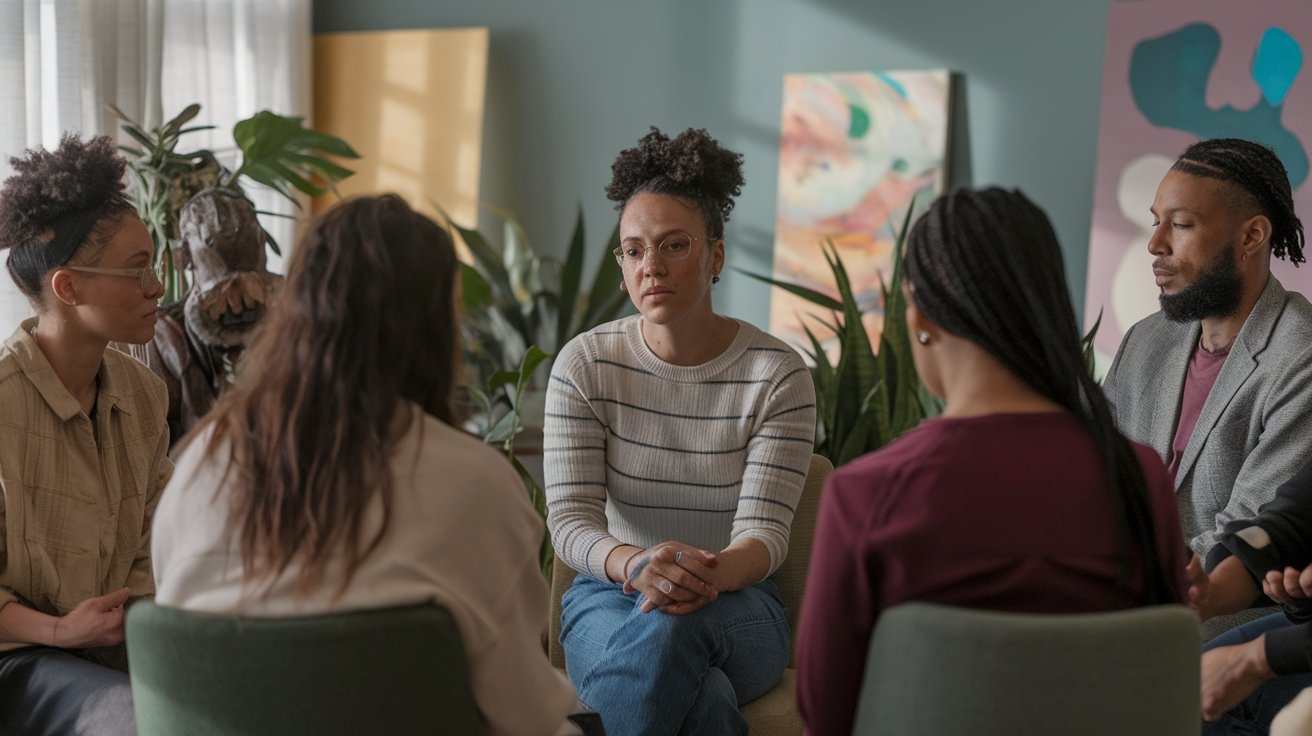
If you are seeking help to recover from abusive behavior, you are taking the most important step toward change. Support groups for recovering abusers provide accountability, skills training, and community for people committed to ending harmful patterns. In 2026, specialized programs across the United States offer evidence-based interventions where recovering individuals can learn healthier relationship skills and break cycles of abuse.
Understanding Support Groups for People Recovering from Abusive Behavior
Support groups for recovering abusers are structured programs designed specifically for individuals who have engaged in abusive behavior and want to change. These groups differ fundamentally from traditional therapy because they focus on accountability, behavior modification, and understanding the root causes of abusive patterns. In the United States, approximately 68% of domestic violence intervention programs now incorporate group-based models as of 2026, recognizing that peer accountability combined with professional guidance creates the most effective path to recovery.
The most common support group models include batterer intervention programs (BIPs), anger management courses, and specialized cognitive-behavioral therapy groups. These programs typically run for 26 to 52 weeks, with weekly sessions lasting 90 to 120 minutes. Participants learn to identify triggers, develop emotional regulation skills, and understand how power and control dynamics contribute to abusive behavior. Unlike support groups for abuse survivors, these programs maintain a confrontational yet supportive approach where recovering abusers cannot minimize their actions or blame victims.
Can People Recover from Being Abusive?
The question of whether people can recover from being abusive is central to understanding the purpose of these support groups. Research published in 2025 by the National Institute of Justice indicates that individuals who complete comprehensive intervention programs show a 40-60% reduction in repeat abusive incidents over a five-year period. Recovery is possible, but it requires sustained commitment, professional guidance, and fundamental changes in thinking patterns.
Successful recovery from abusive behavior involves several critical components. First, the person must accept full responsibility for their actions without excuses or victim-blaming. Second, they must develop genuine empathy for those they have harmed and understand the lasting impact of abuse. Third, they need to acquire new skills for managing emotions, communicating needs, and resolving conflicts without resorting to control or intimidation. Recovery support services that incorporate these elements show significantly better outcomes than punitive approaches alone.
However, experts emphasize that not all individuals who engage in abusive behavior will successfully change. The most critical factor is genuine motivation to change for internal reasons rather than external pressure. People who participate in support groups solely to satisfy court orders or appease partners show lower success rates than those who recognize the harm they have caused and genuinely want to become better people. Mental health professionals in 2026 estimate that approximately 30-40% of program participants achieve lasting behavioral change when they remain engaged in recovery support beyond the minimum required timeframe.
Where to Find Support Groups for Recovering Abusers
Locating appropriate support groups requires understanding the different types of programs available across the United States. The landscape of services has expanded significantly in 2026, with both court-mandated and voluntary programs now accessible in every state.
Court-Mandated Batterer Intervention Programs
The most structured support group for recovering abusers is the batterer intervention program (BIP), which many courts require for individuals convicted of domestic violence offenses. As of 2026, all 50 states maintain certified BIP providers, though standards vary by jurisdiction. These programs typically follow the Duluth Model or cognitive-behavioral approaches, focusing on gender-based power dynamics and belief systems that support abusive behavior. You can locate court-approved programs through your local probation office, district attorney’s office, or state coalition against domestic violence.
Most BIPs require attendance for 26 to 52 weeks with fees ranging from $25 to $75 per session, though sliding scale options exist for those who cannot afford standard rates. These programs maintain strict attendance policies where missing more than two sessions can result in court notification. Participants engage in group discussions, complete homework assignments, and must demonstrate understanding of core concepts before graduating. The most common support group structure involves 12-15 participants led by certified facilitators with backgrounds in domestic violence intervention.
Voluntary Recovery Programs and Therapy Groups
Beyond court-mandated options, voluntary support groups provide alternatives for people who recognize their abusive patterns before legal intervention. Organizations like the National Domestic Violence Hotline can connect you with voluntary programs that maintain confidentiality while still providing accountability. These programs often appeal to individuals who have engaged in emotional abuse, coercive control, or early-stage physical aggression and want to change before causing further harm.
Mental health centers across the United States increasingly offer specialized group therapy for individuals recovering from abusive behavior. These clinical programs, led by licensed therapists, integrate trauma-informed care recognizing that many people who abuse others have histories of being abused themselves. However, facilitators maintain clear boundaries that past trauma never excuses current abusive behavior. Voluntary programs typically cost $40-$150 per session depending on the provider and whether you use insurance coverage, which many plans now include for domestic violence intervention services under mental health benefits.
Online and Telehealth Support Options
The expansion of telehealth services in 2026 has made support groups for recovering abusers more accessible, particularly in rural areas where in-person programs may be limited. Several state-certified programs now offer hybrid or fully virtual formats, though courts may have specific requirements about online participation for mandated attendees. Virtual groups provide the same curriculum and accountability structures as in-person meetings while allowing greater scheduling flexibility and eliminating transportation barriers.
Organizations like the Domestic Abuse Intervention Programs (DAIP) in Duluth, Minnesota, and the Family Peace Initiative in New York have pioneered online formats that maintain program integrity while increasing access. These programs use secure video conferencing platforms, require cameras to be on during sessions, and implement verification systems to ensure the correct person attends each meeting. If you are seeking voluntary help and live in an area without local resources, online recovery support services can provide evidence-based intervention from certified facilitators nationwide.
Types of Treatment Approaches in Recovery Programs
Different support group models employ varied therapeutic approaches, each with distinct philosophies about the causes of abusive behavior and pathways to change. Understanding these differences helps you identify programs aligned with your recovery needs.
The Duluth Model for Intervention
The Duluth Model remains the most widely implemented approach in court-mandated batterer intervention programs across the United States. This model, developed in 1981 and refined through 2026, frames domestic violence as a pattern of behaviors used to establish and maintain power and control over intimate partners. The curriculum uses the Power and Control Wheel to help participants identify tactics beyond physical violence, including intimidation, emotional abuse, isolation, economic control, and coercion.
Support groups following the Duluth Model emphasize gender-based analysis, particularly for male perpetrators of abuse against female partners, though adaptations exist for same-sex relationships and female perpetrators. Sessions challenge participants to examine cultural messages about masculinity, entitlement, and relationship roles. Critics note this approach may oversimplify complex relationship dynamics, but proponents point to decades of research showing effectiveness when properly implemented. The model requires participants to complete educational curricula covering respect, non-threatening behavior, trust and support, honesty and accountability, responsible parenting, shared responsibility, economic partnership, and negotiation and fairness.
Cognitive-Behavioral Therapy Groups
Cognitive-behavioral therapy (CBT) approaches in support groups for recovering abusers focus on identifying and changing the thought patterns that precede abusive behavior. These programs teach participants to recognize cognitive distortions such as minimization, denial, and victim-blaming, then develop alternative thinking patterns that support healthy relationship behaviors. CBT-based groups typically incorporate anger management skills, though facilitators emphasize that abuse is about control rather than anger alone.
Research published in 2025 comparing treatment modalities found that CBT approaches show particular effectiveness for individuals with co-occurring substance abuse issues or mental health conditions. These recovery support services help participants develop concrete skills for stress management, emotional regulation, and conflict resolution. Sessions might include role-playing exercises, homework assignments tracking thoughts and behaviors, and gradual exposure to triggering situations while practicing new responses. Many programs now integrate mindfulness and distress tolerance techniques adapted from dialectical behavior therapy (DBT), recognizing that many people who engage in abusive behavior lack foundational emotional regulation skills.
Trauma-Informed Integrated Approaches
Emerging models in 2026 incorporate trauma-informed principles while maintaining accountability for abusive behavior. These support groups recognize that approximately 70% of people who perpetrate domestic violence have histories of childhood trauma or victimization, though this never excuses harmful behavior. Trauma-informed programs help participants understand how unresolved trauma may contribute to reactive aggression or maladaptive coping strategies while simultaneously holding them responsible for their choices.
The most effective integrated approaches combine elements from multiple models, addressing power and control dynamics, cognitive distortions, skill deficits, and trauma responses. These programs often extend beyond the standard 26-week format, recognizing that fundamental behavioral change requires sustained intervention. Participants learn to identify trauma triggers separate from conscious choices to control or intimidate, developing healthier responses to both. This nuanced approach has shown promising results in reducing recidivism rates while also addressing underlying mental health needs that contribute to relationship dysfunction.
Understanding Your Insurance Coverage for Recovery Programs in 2026
Navigating insurance coverage for support groups for recovering abusers has become more straightforward following federal mental health parity legislation expansions. As of January 2026, the Mental Health Parity and Addiction Equity Act requires most insurance plans to cover domestic violence intervention programs under behavioral health benefits when provided by licensed mental health professionals.
Major insurance providers including UnitedHealthcare, Anthem Blue Cross Blue Shield, Aetna, and Cigna now explicitly include batterer intervention programs in their covered services, though court-mandated programs may have different coverage rules than voluntary participation. You should contact your insurance provider to verify whether your specific plan covers group therapy for recovering from abusive behavior, what copayment or coinsurance applies, and whether you need prior authorization. Many programs employ billing specialists who can verify benefits and help you understand out-of-pocket costs before enrollment.
For those without insurance coverage, numerous programs offer sliding scale fees based on income, and some states maintain funding for low-cost intervention services. Medicaid expansion under the Affordable Care Act has also improved access to recovery support services in states that accepted expansion, covering behavioral health group therapy for eligible individuals. Additionally, some domestic violence agencies operate programs funded through federal Victims of Crime Act (VOCA) grants or state appropriations that provide free or reduced-cost services regardless of ability to pay. Financial barriers should not prevent you from accessing help if you are genuinely committed to changing abusive behavior.
What to Expect in Your First Support Group Session
Understanding what happens in a support group for recovering abusers can reduce anxiety about taking this important first step. Initial sessions typically focus on orientation, establishing group rules, and setting expectations for participation and accountability.
During your first meeting, facilitators will explain program structure, attendance requirements, confidentiality policies, and consequences for rule violations. Most programs require participants to sign behavioral contracts agreeing to treat all group members with respect, arrive on time, complete assignments, and remain free from substance use during sessions. You will likely be asked to share basic information about the incident or pattern that brought you to the group, though detailed discussions of abuse typically wait until later sessions after rapport develops.
Support groups maintain a confrontational but supportive atmosphere where facilitators and peers will challenge minimizations, excuses, and victim-blaming while also acknowledging the difficulty of behavioral change. Expect to feel uncomfortable at times as the group pushes you to take full responsibility for your actions and examine belief systems you may have held for years. This discomfort is part of the change process. Facilitators work to create environments where people recovering from abusive behavior can be honest about their struggles while receiving guidance toward healthier patterns.
Most programs assign homework from the first session, which might include journaling about relationship history, completing worksheets on power and control tactics, or identifying personal triggers for abusive behavior. Completion of these assignments demonstrates commitment to change and provides material for group discussions. Many participants report that the most valuable aspect of these recovery support services is hearing from others at different stages of recovery, learning what has worked for peers, and developing accountability relationships that extend beyond formal sessions.
Additional Resources Beyond Support Groups
While support groups for recovering abusers provide essential structure and accountability, comprehensive recovery typically requires additional resources and ongoing commitment beyond program completion. Connecting with broader networks enhances long-term success in maintaining behavioral changes.
Individual Therapy and Mental Health Treatment
Many individuals benefit from concurrent individual therapy alongside group participation. A licensed therapist can address personal trauma history, mental health conditions, or relationship patterns in depth that group settings cannot accommodate. Individual therapy provides a confidential space to process difficult emotions that arise during group work and develop personalized strategies for your specific triggers and challenges. When seeking individual therapy to complement support group participation, look for providers with specialized training in domestic violence perpetration, as generalist therapists may lack the specific expertise needed to effectively address abusive behavior patterns.
Conditions such as post-traumatic stress disorder, depression, anxiety disorders, or substance use disorders commonly co-occur with abusive behavior. Treating these underlying conditions through evidence-based interventions improves outcomes for people recovering from abusive behavior. However, mental health treatment should never serve as an excuse for abuse or replace accountability-focused intervention. The most effective approach integrates mental health treatment that addresses contributing factors while maintaining participation in specialized programs that directly target abusive behavior patterns.
Cultural, Religious, and Community Networks
Connecting with cultural, religious, or other social networks can provide additional support structures as you work to change abusive patterns. Many faith communities offer counseling services, men’s groups, or couples programs that can complement formal recovery support services, though these should never replace certified intervention programs. Cultural organizations specific to your background may offer perspectives on healthy relationships that resonate with your values while challenging harmful traditional norms that enable abusive behavior.
However, approach community resources with discernment. Some religious or cultural counseling may minimize abuse or encourage victims to remain in dangerous situations, which is harmful and counterproductive. The most helpful community connections acknowledge that abuse is never acceptable regardless of cultural or religious traditions while providing culturally responsive support for behavioral change. Organizations like the National Resource Center on Domestic Violence maintain directories of culturally specific programs that combine cultural competency with evidence-based domestic violence intervention.
Crisis Resources and Emergency Support
If you find yourself in crisis or at risk of engaging in abusive behavior, immediate resources are available. The 988 Suicide and Crisis Lifeline, accessible by calling or texting 988 or chatting at 988lifeline.org, provides 24/7 support for mental health crises. While primarily known for suicide prevention, trained counselors can also connect you with resources if you are struggling with urges to harm others or need immediate de-escalation support.
The National Domestic Violence Hotline at 1-800-799-7233 primarily serves survivors but maintains resources for individuals seeking help to stop their own abusive behavior. Counselors can provide information about support groups in your area and offer strategies for creating safety plans that protect others from your behavior while you pursue treatment. Many local domestic violence agencies also operate helplines that can connect you with appropriate services. Taking immediate action to seek help when you recognize warning signs demonstrates genuine commitment to change and can prevent serious harm.
Long-Term Recovery and Relapse Prevention
Completing a support group for recovering abusers marks an important milestone, but lasting change requires ongoing vigilance and continued practice of skills learned in treatment. Research on behavioral change indicates that the first two years after program completion represent the highest risk period for returning to abusive patterns.
Developing a personalized relapse prevention plan before completing your program is essential. This plan should identify your specific triggers, early warning signs that you are moving toward abusive behavior, and concrete steps to interrupt that progression. Effective prevention plans include contact information for trusted supports you can call when struggling, strategies for removing yourself from triggering situations, and ongoing practices like journaling or meditation that support emotional regulation. Many individuals benefit from continuing in voluntary support groups even after completing mandated programs, maintaining accountability and connection with others committed to healthy relationships.
Life stressors such as job loss, health problems, or relationship conflicts can challenge your commitment to non-abusive behavior. Preparing for these challenges while in treatment helps you navigate them successfully later. Some programs offer alumni groups or ongoing drop-in sessions where graduates can return for additional support during difficult periods. Maintaining connection with your individual therapist, if you have one, provides another safety net. Remember that seeking help during struggles does not represent failure but rather demonstrates the self-awareness and commitment to others’ safety that characterizes genuine recovery from abusive behavior.
Related video about support group for recovering abusers
This video complements the article information with a practical visual demonstration.
Frequently Asked Questions
Can people truly recover from being abusive in relationships?
Yes, people can recover from being abusive, but it requires sustained commitment and professional intervention. Research from 2025 shows that individuals who complete comprehensive batterer intervention programs demonstrate 40-60% reduction in repeat abusive incidents over five years. Successful recovery demands accepting full responsibility without excuses, developing genuine empathy for those harmed, and acquiring new emotional regulation and communication skills. The most critical factor is genuine internal motivation to change rather than external pressure alone. While not everyone who engages in treatment succeeds, those who remain committed to recovery support services beyond minimum requirements show significantly better long-term outcomes.
Where can I find support groups for recovering abusers near me?
You can locate support groups for recovering abusers through several channels. Court-mandated batterer intervention programs are available through your local probation office, district attorney’s office, or state coalition against domestic violence. For voluntary programs, contact the National Domestic Violence Hotline at 1-800-799-7233 or local mental health centers that offer specialized group therapy. As of 2026, all 50 states maintain certified programs, with increasing availability of telehealth options for those in rural areas. Many programs also list on psychology provider directories under domestic violence intervention or anger management services. Insurance providers can identify in-network options if you are seeking coverage for treatment.
What is the difference between anger management and support groups for abusive behavior?
Support groups for recovering abusers differ fundamentally from general anger management programs. While anger management focuses on emotional regulation and stress reduction, specialized abuse intervention programs address power, control, and belief systems that support abusive behavior. Abuse is about control rather than anger alone, so effective programs challenge entitlement attitudes, gender-based assumptions, and tactics beyond physical violence including intimidation, isolation, and coercion. Batterer intervention programs typically run 26-52 weeks compared to 8-12 weeks for anger management, recognizing that changing deeply ingrained patterns requires extended intervention. Using anger management alone for domestic violence perpetration is generally considered inadequate by experts in the field.
Will my insurance cover a support group for recovering from abusive behavior?
As of 2026, most insurance plans cover support groups for recovering abusers under behavioral health benefits following Mental Health Parity and Addiction Equity Act expansions. Major providers including UnitedHealthcare, Anthem, Aetna, and Cigna now explicitly include batterer intervention programs when provided by licensed mental health professionals. However, coverage specifics vary by plan, and court-mandated programs may have different rules than voluntary participation. You should contact your insurance provider to verify coverage, understand copayments or coinsurance, and determine if prior authorization is needed. For those without coverage, many programs offer sliding scale fees, and Medicaid expansion has improved access to recovery support services in participating states.
How long do support groups for recovering abusers typically last?
Most support groups for recovering abusers run between 26 and 52 weeks, with weekly sessions lasting 90 to 120 minutes. Court-mandated batterer intervention programs typically require the full duration with strict attendance policies where missing more than two sessions results in court notification. The extended timeframe reflects research showing that fundamental behavioral change requires sustained intervention over months rather than weeks. Voluntary programs may offer more flexibility in duration, though experts recommend at least six months of consistent participation for meaningful change. Some individuals choose to continue in alumni groups or voluntary sessions after completing formal programs, recognizing that ongoing accountability supports long-term recovery from abusive behavior patterns.
What happens if I am ordered to attend a support group but cannot afford it?
Financial barriers should not prevent access to support groups for recovering abusers. Most certified programs offer sliding scale fees based on income, with costs ranging from $10-75 per session depending on your financial situation. Some states maintain funding for low-cost intervention services through federal Victims of Crime Act grants or state appropriations. Medicaid covers group therapy in expansion states for eligible individuals. Additionally, some programs allow participants to arrange payment plans or perform community service in exchange for reduced fees. If cost is a concern, inform the program during intake so they can work with you on affordable options. Courts generally accept financial hardship documentation when it legitimately prevents participation, but you must demonstrate good faith efforts to access available assistance rather than simply refusing to attend.
| Program Type | Key Features | Best For |
|---|---|---|
| Court-Mandated BIPs | 26-52 weeks, strict attendance, certified facilitators, focus on accountability | Individuals with legal requirements or serious abuse history |
| Voluntary Support Groups | Flexible schedules, confidential, combines education with therapy | People recognizing early patterns who want to change proactively |
| Online/Telehealth Programs | Virtual attendance, state-certified, same curriculum as in-person | Rural residents or those with transportation/scheduling barriers |
| Individual Therapy | One-on-one sessions, addresses trauma and mental health, personalized | Complement to group work for deeper personal issues |
| Alumni/Ongoing Groups | Post-completion support, relapse prevention, continued accountability | Graduates maintaining long-term recovery and skill practice |