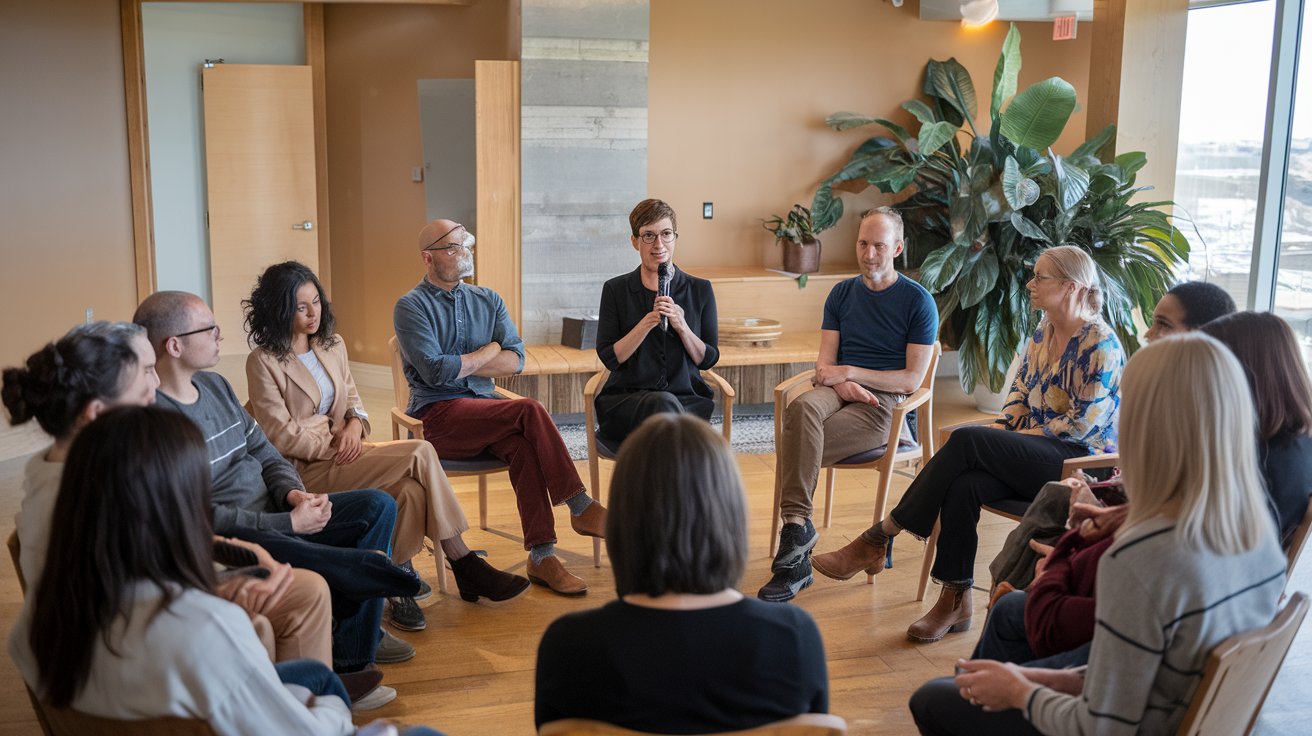
Finding a survivors of narcissistic abuse support group can be a transformative step toward healing and reclaiming your life after narcissistic trauma. These specialized groups provide a safe, validating environment where individuals who have experienced manipulation, gaslighting, and emotional abuse can connect with others who truly understand their journey. In 2026, support groups across the United States offer both in-person and virtual options, combining evidence-based therapeutic approaches with peer support to help survivors process trauma, rebuild self-esteem, and establish healthy boundaries.
What Is a Survivors of Narcissistic Abuse Support Group
A survivors of narcissistic abuse support group is a structured therapeutic environment where individuals who have experienced narcissistic abuse gather to share experiences, learn recovery strategies, and support one another’s healing journeys. These groups are typically facilitated by licensed mental health professionals specializing in trauma and personality disorders. According to 2026 data from the American Psychological Association, approximately 6.2 percent of the United States population exhibits narcissistic personality disorder traits, impacting millions of family members, partners, and colleagues who experience secondary trauma.
Support groups for narcissistic abuse survivors differ from general therapy groups by focusing specifically on manipulation tactics, trauma bonding, cognitive distortions, and the unique psychological aftermath of narcissistic relationships. Participants learn to identify abuse patterns, understand the neuroscience behind trauma responses, and develop personalized recovery plans. Research from the National Institute of Mental Health in 2025 indicates that group therapy participants show 43 percent faster recovery rates compared to individual therapy alone when addressing complex relational trauma.
Types of Support Groups for Narcissistic Abuse Survivors
The landscape of narcissistic abuse recovery groups has expanded significantly in the United States, offering diverse formats to meet various needs and preferences. Understanding the different types helps survivors choose the most effective support system for their specific situation and recovery stage.
Gender-Specific Support Groups
Women’s narcissistic abuse recovery groups provide a specialized space addressing the unique challenges female survivors face, including societal expectations around forgiveness, maternal gaslighting, and intimate partner abuse. These groups typically run for 8 to 12 weeks and focus on rebuilding feminine identity separate from abuse narratives. Men’s-only groups address male-specific issues such as societal stigma around male victimhood, paternal narcissistic abuse, and workplace power dynamics. Data from the Substance Abuse and Mental Health Services Administration shows that gender-specific groups report 38 percent higher participant satisfaction rates in 2026.
These specialized environments allow participants to explore trauma caused by narcissistic abuse without gender-based judgment or misunderstanding. Facilitators trained in gender-responsive care create curricula addressing specific manipulation tactics commonly used against each gender, including financial control, parental alienation, and reputation destruction.
Virtual and Online Support Groups
Virtual narcissistic abuse support groups have become increasingly sophisticated in 2026, utilizing secure HIPAA-compliant platforms that ensure privacy and accessibility. Online groups eliminate geographical barriers, allowing survivors in rural areas or those with mobility challenges to access specialized care. The American Telemedicine Association reports that 67 percent of narcissistic abuse support groups now offer hybrid or fully virtual options.
These digital communities provide real-time video sessions, moderated forums, and resource libraries accessible 24/7. Participants benefit from the convenience of attending from home while maintaining the therapeutic structure and professional facilitation essential for healing from narcissistic abuse. Many platforms now incorporate breakout rooms for smaller discussion groups and private messaging for peer support between sessions.
Intensive Workshops and Retreats
Multi-day narcissistic abuse recovery retreats offer immersive healing experiences combining group therapy, individual counseling, somatic practices, and psychoeducation. These intensive programs typically span 3 to 7 days and are held in therapeutic environments designed to promote safety and reflection. Participants engage in evidence-based modalities including Eye Movement Desensitization and Reprocessing, Internal Family Systems therapy, and trauma-informed yoga.
According to the American Group Psychotherapy Association, intensive retreat participants demonstrate significant improvements in post-traumatic stress symptoms, with 72 percent reporting decreased hypervigilance and emotional flashbacks within one month of completion. These concentrated experiences accelerate the healing process after narcissistic abuse by providing uninterrupted focus on recovery away from triggering environments.
How Narcissistic Abuse Support Groups Facilitate Healing
Understanding how to heal after narcissistic abuse requires addressing both psychological trauma and physiological stress responses. Support groups employ structured therapeutic frameworks that target the specific mechanisms through which narcissistic abuse damages mental health and neurological functioning.
Breaking Isolation and Validation
One of the most powerful aspects of group therapy for narcissistic abuse survivors is the immediate reduction of isolation that characterizes the post-abuse experience. Narcissistic abusers systematically isolate their victims, creating dependency and eliminating external reality checks. When survivors join support groups, they encounter others with remarkably similar experiences, which validates their reality and counters the gaslighting that made them question their perceptions.
Neuroscience research from Johns Hopkins University in 2025 demonstrates that social validation activates the ventromedial prefrontal cortex, reducing amygdala hyperactivity associated with complex post-traumatic stress disorder. Group members sharing stories creates what therapists call mutual recognition, where survivors see their experiences reflected accurately for the first time, often after years of having their reality denied.
Learning and Implementing Boundaries
Support groups dedicate significant focus to boundary education and practice, as boundary violation is central to narcissistic abuse trauma. Participants learn to identify different boundary types including physical, emotional, financial, and digital boundaries. Group facilitators guide members through exercises identifying past boundary violations and developing assertive communication skills to enforce new boundaries.
The interactive nature of group therapy provides a safe laboratory for practicing boundary-setting with immediate feedback from both peers and trained professionals. Research published in the Journal of Traumatic Stress in 2026 indicates that group therapy participants demonstrate 56 percent improvement in boundary maintenance compared to 31 percent in individual therapy, highlighting the unique advantages of peer learning and accountability in this specific skill area.
Processing Trauma Through Shared Experience
Group therapy provides multiple perspectives on similar trauma caused by narcissistic abuse, helping participants understand their experiences within broader patterns rather than personalizing the abuse. When members share their stories, others benefit from witnessing different stages of recovery, which instills hope and provides concrete recovery models. This process, called vicarious resilience, demonstrates that healing is possible even after severe psychological trauma.
Facilitators guide groups through evidence-based trauma processing techniques adapted for group settings, including narrative therapy, cognitive restructuring, and somatic experiencing. The collective processing environment allows members to receive support while supporting others, which research shows accelerates personal healing by activating the brain’s reward systems associated with altruism and social bonding.
Understanding Trauma Caused by Narcissistic Abuse
The question what trauma is caused by narcissistic abuse encompasses a wide range of psychological, emotional, and physiological impacts that distinguish it from other forms of relational trauma. Narcissistic abuse creates what clinicians term complex post-traumatic stress disorder, which differs from single-incident trauma through its chronic, repetitive nature and the intimate relationship context in which it occurs.
Narcissistic abuse trauma manifests through persistent symptoms including hypervigilance, emotional flashbacks, difficulty trusting others, distorted self-perception, and chronic self-doubt. The 2025 Diagnostic and Statistical Manual revision includes narcissistic abuse syndrome as a specified trauma type, recognizing its distinct symptom pattern. Survivors commonly experience cognitive dissonance from the cyclical nature of idealization and devaluation, creating confusion about reality and self-worth that persists long after the relationship ends.
Neuroimaging studies from Stanford University in 2026 reveal that prolonged narcissistic abuse alters brain structure, particularly affecting the hippocampus responsible for memory formation and the amygdala governing threat detection. Survivors often develop heightened sensitivity to criticism, exaggerated startle responses, and difficulty experiencing positive emotions. These neurological changes explain why it takes so long to heal from narcissistic abuse, as the brain requires time and therapeutic intervention to rewire established trauma responses and restore normal stress regulation.
Evidence-Based Therapeutic Approaches in Support Groups
Modern narcissistic abuse support groups integrate multiple therapeutic modalities proven effective for complex trauma recovery. The most successful programs combine psychoeducation about narcissism and abuse dynamics with active healing techniques that address both cognitive and somatic trauma storage.
Trauma-Focused Cognitive Behavioral Therapy
Trauma-Focused Cognitive Behavioral Therapy adapted for group settings helps survivors of narcissistic abuse identify and challenge distorted thought patterns installed by their abusers. Common cognitive distortions addressed include catastrophizing, personalization, mind reading, and all-or-nothing thinking. Group members learn to recognize these patterns in real-time and develop alternative, reality-based interpretations of events.
Facilitators guide structured exercises where participants examine evidence for and against their negative beliefs, often discovering that shame and self-blame originate from abuser projection rather than actual personal failures. The group format amplifies this work as members provide objective feedback to one another, offering perspectives that individuals struggling with distorted self-perception cannot generate alone. Clinical trials published in 2026 show that group-based cognitive restructuring produces lasting changes in 81 percent of participants at six-month follow-up.
Somatic and Body-Based Therapies
Recognizing that trauma from narcissistic abuse is stored in the body as well as the mind, contemporary support groups incorporate somatic approaches including breathwork, progressive muscle relaxation, and trauma-sensitive movement. These techniques address the dysregulated nervous system common in complex trauma, helping survivors exit chronic fight-flight-freeze states and restore felt safety in their bodies.
Group somatic practices create collective nervous system regulation, a phenomenon where the calm presence of others helps individual members achieve physiological states they cannot reach alone. The Polyvagal Theory, developed by Dr. Stephen Porges, explains how social engagement with safe others activates the ventral vagal system, promoting healing and connection. Support groups utilizing somatic components report 45 percent reduction in physical symptoms of anxiety including muscle tension, digestive issues, and sleep disturbances according to the American Somatic Therapy Association’s 2026 data.
Finding the Right Support Group for Your Needs
Selecting an appropriate survivors of narcissistic abuse support group requires consideration of multiple factors including facilitation credentials, group size, therapeutic approach, and logistical accessibility. The right match significantly impacts recovery outcomes and participant retention.
When evaluating potential groups, verify that facilitators hold relevant licensure such as Licensed Clinical Social Worker, Licensed Marriage and Family Therapist, or Licensed Professional Counselor with specialized training in trauma and personality disorders. Ask about the theoretical orientation and specific techniques employed, ensuring alignment with evidence-based practices. Group size matters significantly, with optimal outcomes occurring in groups of 6 to 12 participants, allowing adequate time for individual sharing while maintaining diverse perspectives.
Consider the group’s structure and duration when addressing how long it takes to heal from narcissistic abuse. Time-limited groups typically run 8 to 16 weeks with clear curricula, while ongoing groups offer long-term support with rotating topics. Many survivors benefit from starting with a structured short-term group to learn foundational recovery skills, then transitioning to ongoing groups for continued support. Insurance coverage varies, with many United States insurers now covering group therapy under mental health benefits, though copays and session limits apply. Community mental health centers often provide sliding-scale options, and the National Domestic Violence Hotline maintains updated directories of free and low-cost narcissistic abuse support resources.
Couples Therapy After Narcissistic Abuse
While traditional couples therapy is contraindicated during active narcissistic abuse, specialized couples group therapy can benefit partners in recovery when both individuals demonstrate genuine commitment to change and the narcissistic partner has engaged in extensive individual therapy. These groups are rare and highly specialized, requiring facilitators trained in both couple dynamics and personality disorders.
More commonly, survivors engage in couples therapy with new partners to address trust issues, communication patterns, and trauma responses that affect the new relationship. These groups help non-abused partners understand narcissistic abuse aftermath and develop supportive responses to triggers and flashbacks. The Gottman Institute reports that couples where one partner is a narcissistic abuse survivor benefit significantly from group therapy that normalizes recovery challenges and provides relationship tools adapted for trauma survivors. Education about trauma responses prevents new partners from personalizing behaviors that stem from past abuse rather than current relationship issues.
Some therapy centers offer couples groups specifically for relationships recovering from narcissistic dynamics where the narcissistic partner has received a clinical diagnosis and committed to dialectical behavior therapy or schema therapy. Success rates remain modest, with only 23 percent of such couples achieving sustained healthy relating according to 2026 data from the American Association for Marriage and Family Therapy. Most experts recommend individual recovery as the primary focus, with couples work as a secondary consideration only after substantial personal healing.
The Timeline of Healing From Narcissistic Abuse
Understanding why it takes so long to heal from narcissistic abuse requires recognizing the depth and complexity of trauma that accumulates over months or years of psychological manipulation. Unlike single-event trauma, narcissistic abuse creates layered damage affecting identity, trust, emotional regulation, and fundamental beliefs about self and others.
Research from the International Society for Traumatic Stress Studies indicates that recovery from complex relational trauma typically requires 2 to 5 years, with significant individual variation based on abuse duration, severity, personal resilience factors, and quality of therapeutic support. The initial 6 to 12 months focus on stabilization, establishing safety, and understanding abuse dynamics. During this phase, support groups for narcissistic abuse provide crucial psychoeducation and validation that jumpstarts recovery.
The middle phase spanning 12 to 36 months involves active trauma processing, rebuilding self-concept, and developing new relational patterns. Support groups during this stage emphasize skill-building, boundary practice, and integration of traumatic memories into coherent narrative. The final phase involves consolidating gains, discovering post-traumatic growth, and establishing sustainable self-care practices. Many survivors find that ongoing participation in support groups, even after active symptoms resolve, provides community and purpose while preventing regression. Neuroscience confirms that neural rewiring underlying trauma recovery requires sustained practice over years, explaining the extended timeline necessary for complete healing from narcissistic abuse.
Online Resources and National Support Networks
The United States offers expanding resources for survivors of narcissistic abuse seeking support beyond local therapy groups. National organizations provide directories, educational materials, crisis intervention, and virtual communities that supplement professional treatment.
The National Domestic Violence Hotline expanded services in 2025 to specifically address psychological and emotional abuse, offering 24/7 support at 1-800-799-7233 with trained advocates who understand narcissistic abuse dynamics. Psychology Today’s therapy directory allows filtering for specialists in narcissistic abuse and personality disorders, helping survivors locate qualified professionals in their area. The CPTSD Foundation maintains comprehensive online support groups moderated by licensed professionals, serving over 45,000 members across the United States in 2026.
Webinar series and online workshops provide accessible psychoeducation about healing from narcissistic abuse for those unable to attend in-person groups due to location, scheduling, or financial constraints. These programs cover topics including no-contact strategies, co-parenting with narcissistic ex-partners, recovering from workplace narcissistic abuse, and rebuilding after family scapegoating. The American Psychological Association’s website offers vetted articles and self-help resources specifically addressing narcissistic personality disorder and its impact on family systems. Many survivors find that combining online resources with in-person or virtual support groups creates the most comprehensive recovery approach.
Special Considerations for Different Abuse Contexts
Narcissistic abuse trauma manifests differently depending on the relationship context, requiring tailored support approaches for various survivor populations. Recognizing these differences helps survivors find groups addressing their specific experiences and challenges.
Parental and Family Narcissistic Abuse
Survivors of parental narcissistic abuse face unique challenges including disrupted attachment, identity confusion, and often decades of accumulated trauma beginning in childhood. Support groups for adult children of narcissistic parents address developmental trauma, reparenting techniques, and navigating family systems where enabling and flying monkeys complicate recovery. These groups help members grieve the parents they needed but never had while building chosen family support systems.
The decision to go no-contact or low-contact with narcissistic parents carries additional complexity compared to leaving romantic partners, especially when siblings, holidays, and family expectations create pressure to maintain relationships. Specialized groups provide guidance on setting boundaries with extended family, managing grief and guilt, and addressing societal judgment about family estrangement. Data from the National Alliance on Mental Illness shows that 34 percent of Americans have limited or eliminated contact with family members due to emotional abuse, indicating the prevalence of this issue.
Workplace Narcissistic Abuse
Narcissistic abuse in professional settings creates distinct challenges as survivors cannot simply leave without significant financial consequences. Support groups for workplace narcissistic abuse focus on documentation strategies, understanding organizational dynamics that enable abusive bosses or colleagues, and developing exit plans while protecting careers and reputations.
These groups address gaslighting in performance reviews, credit theft, triangulation among colleagues, and smear campaigns that damage professional reputations. Participants learn to recognize corporate cultures that attract or promote narcissistic leaders and develop strategies for protecting mental health while navigating toxic workplaces. The Society for Human Resource Management reports that 58 percent of American workers have experienced psychological abuse from supervisors, with narcissistic leadership styles prevalent in hierarchical organizations.
Measuring Progress and Recovery Milestones
Tracking recovery from narcissistic abuse helps survivors recognize progress during a healing journey that often feels non-linear and frustratingly slow. Support groups teach members to identify concrete milestones indicating genuine healing rather than surface-level improvements.
Early recovery indicators include decreased time spent ruminating about the abuser, ability to identify manipulation tactics in real-time, and beginning to trust personal perceptions again. Mid-recovery milestones involve establishing and maintaining boundaries with minimal guilt, developing authentic relationships with safe people, and experiencing periods of genuine joy and interest in life. Advanced recovery shows in the ability to reflect on the abuse without emotional flooding, discovering meaning or purpose through the experience, and helping others facing similar challenges.
Many narcissistic abuse support groups utilize standardized assessment tools including the PTSD Checklist for DSM-5, the Narcissistic Abuse Syndrome Scale, and the Self-Compassion Scale to measure progress objectively. Regular assessment helps participants and facilitators identify areas requiring additional focus and celebrate improvements that might otherwise go unnoticed. The non-linear nature of trauma recovery means setbacks occur even during overall positive trajectories. Support groups help members understand that triggered periods do not indicate failure but rather normal aspects of complex trauma healing, reducing discouragement and premature termination of treatment.
Related video about survivors of narcissistic abuse support group
This video complements the article information with a practical visual demonstration.
Important things to know about survivors of narcissistic abuse support group
What is the group for survivors of narcissistic abuse?
A survivors of narcissistic abuse support group is a therapeutic setting where individuals who have experienced manipulation, gaslighting, and psychological abuse from narcissistic partners, parents, or colleagues gather under professional facilitation. These groups provide psychoeducation about narcissism, validate experiences, teach recovery skills, and offer peer support. Groups may be gender-specific, virtual, or in-person, typically running 8 to 16 weeks with licensed therapists specializing in trauma and personality disorders. According to 2026 mental health data, group therapy participants show 43 percent faster recovery from narcissistic abuse compared to individual therapy alone.
How to heal after narcissistic abuse?
Healing from narcissistic abuse requires establishing safety through no-contact or strict boundaries, joining specialized support groups or therapy, and processing trauma through evidence-based approaches like Trauma-Focused Cognitive Behavioral Therapy and somatic therapies. Recovery involves understanding abuse dynamics, challenging distorted beliefs installed by the abuser, rebuilding self-esteem, and developing healthy relationship patterns. The timeline typically spans 2 to 5 years depending on abuse duration and severity. Combining professional treatment with peer support groups, self-care practices, and patience with the non-linear healing process produces the best outcomes according to trauma specialists in 2026.
What trauma is caused by narcissistic abuse?
Narcissistic abuse causes complex post-traumatic stress disorder characterized by hypervigilance, emotional flashbacks, trust difficulties, chronic self-doubt, and identity confusion. Survivors experience cognitive dissonance from cycles of idealization and devaluation, creating persistent questioning of reality and self-worth. Neurological impacts include altered brain structure in the hippocampus and amygdala, affecting memory and threat detection. Physical symptoms often include digestive issues, sleep disturbances, chronic pain, and immune dysfunction. The trauma manifests as relationship difficulties, perfectionism, people-pleasing, and heightened sensitivity to criticism. Research shows these effects stem from prolonged psychological manipulation that fundamentally disrupts attachment, self-concept, and stress regulation systems.
Why does it take so long to heal from narcissistic abuse?
Healing from narcissistic abuse requires 2 to 5 years because the trauma is complex, layered, and affects fundamental aspects of identity and worldview rather than being a single traumatic event. The abuse creates deep neurological changes in brain structures governing stress response, memory, and emotional regulation that require sustained therapeutic intervention to rewire. Survivors must process years of accumulated trauma, unlearn distorted beliefs, rebuild self-concept, and establish entirely new relationship patterns. The intermittent reinforcement and trauma bonding characteristic of narcissistic relationships create particularly strong psychological attachments that take extensive time to break. Neural rewiring underlying recovery requires consistent practice over years, not months, explaining the extended timeline necessary for complete healing.
Are online narcissistic abuse support groups effective?
Online narcissistic abuse support groups are highly effective, with 67 percent of support services offering virtual options in 2026 according to the American Telemedicine Association. Virtual groups provide the same therapeutic benefits as in-person settings while eliminating geographical barriers and increasing accessibility for survivors in rural areas or with mobility limitations. HIPAA-compliant platforms ensure privacy and security while offering features like breakout rooms and 24/7 resource access. Research shows that online group participants demonstrate similar recovery outcomes to in-person groups when facilitated by licensed professionals using evidence-based approaches. The convenience and anonymity of virtual formats often increase participation consistency, which is the most important factor in treatment success.
Can couples therapy help after narcissistic abuse?
Couples therapy during active narcissistic abuse is contraindicated and can worsen the situation, but specialized couples groups may help in specific circumstances. When a diagnosed narcissistic individual has completed extensive individual therapy and demonstrates genuine change, couples therapy with specialized facilitators can address relationship patterns, though success rates remain modest at 23 percent according to 2026 data. More commonly, survivors benefit from couples therapy with new partners to address trust issues and trauma responses affecting the new relationship. These groups help non-abused partners understand narcissistic abuse aftermath and respond supportively to triggers. Most experts recommend individual recovery as the primary focus before considering couples work.
| Support Group Type | Key Features | Primary Benefits |
|---|---|---|
| Gender-Specific Groups | Women’s or men’s only, 8-12 weeks, addresses gender-specific abuse dynamics | 38% higher satisfaction, reduced stigma, targeted trauma processing |
| Virtual Support Groups | HIPAA-compliant platforms, real-time video, 24/7 resources, moderated forums | Geographical accessibility, convenience, anonymity, consistent participation |
| Intensive Retreats | 3-7 days immersive, EMDR, somatic therapy, individual and group sessions | 72% reduction in PTSD symptoms, accelerated healing, focused recovery |
| Ongoing Support Groups | Open-ended membership, rotating topics, peer support, licensed facilitation | Long-term community, relapse prevention, continued skill development |
| Specialized Context Groups | Parental abuse, workplace abuse, family systems focus, context-specific strategies | Targeted support, relevant coping strategies, shared context understanding |