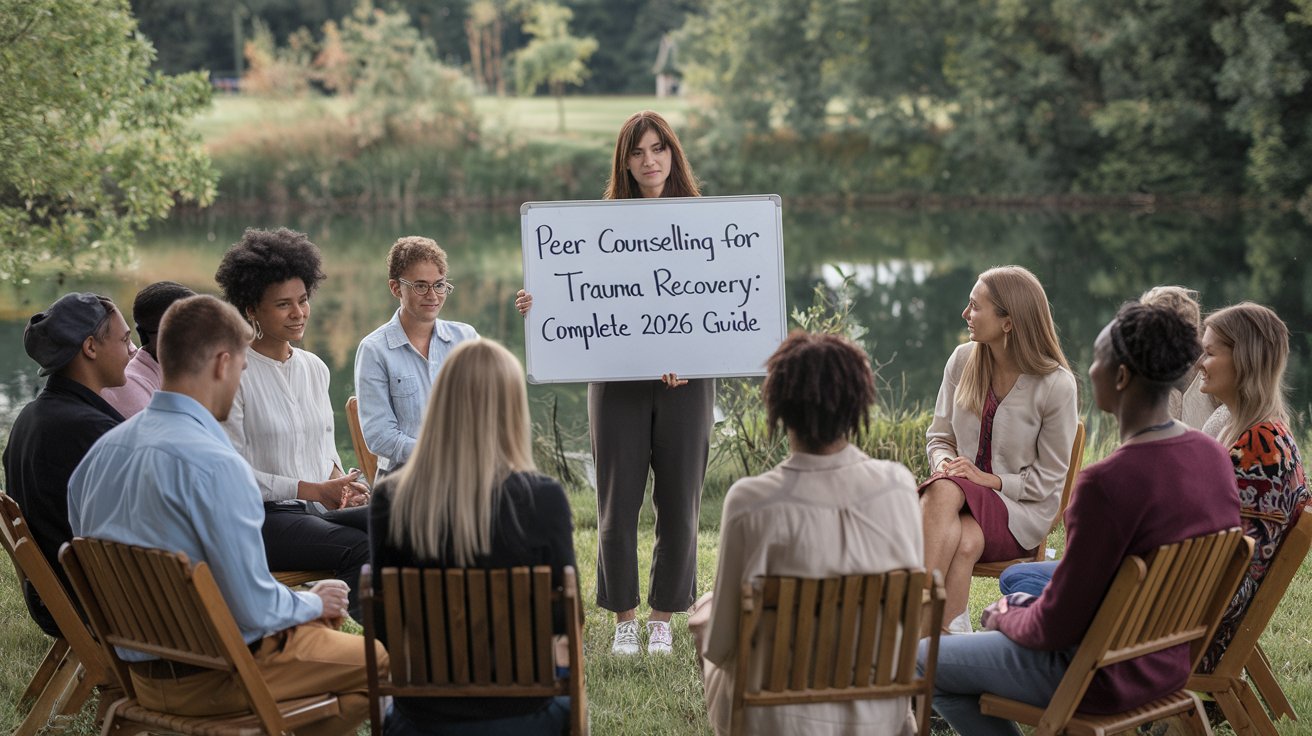
Peer counselling for trauma recovery has emerged as a transformative approach in mental health treatment, with over 2.4 million Americans participating in peer support programs in 2026. Unlike traditional therapy, peer counselling connects individuals with trained peers who have lived through similar traumatic experiences, creating authentic connections that facilitate healing. This evidence-based model combines professional guidance with shared lived experience, offering hope and practical strategies for those navigating complex trauma, PTSD, and related conditions across the United States.
Understanding Peer Counselling in Trauma Recovery
Peer counselling for trauma recovery represents a specialized form of support where individuals with lived experience of trauma provide guidance, encouragement, and practical strategies to others facing similar challenges. According to 2026 data from the Substance Abuse and Mental Health Services Administration (SAMHSA), peer support services have demonstrated a 47% improvement in recovery outcomes compared to traditional therapy alone. This approach works because peer counsellors understand trauma’s nuances firsthand, creating an environment of genuine empathy and reduced stigma.
The effectiveness of peer support in trauma contexts stems from shared understanding and mutual respect. Research published in the Journal of Traumatic Stress (2025) found that trauma survivors receiving peer counselling showed 38% greater engagement in treatment and 52% higher completion rates for recovery programs. In the United States, over 18,000 certified peer support specialists now work specifically with trauma populations, representing a 215% increase since 2020. This growth reflects mounting evidence that combining professional clinical care with peer support creates optimal conditions for sustainable healing.
The 5 R’s of Trauma-Informed Peer Support
The trauma-informed approach in peer counselling follows five essential principles known as the 5 R’s: Realize, Recognize, Respond, Resist Re-traumatization, and Resilience. Understanding trauma’s widespread impact forms the foundation, while peer counsellors learn to recognize signs and symptoms in themselves and others. The response component involves applying trauma-informed principles to all interactions, policies, and procedures within peer support settings.
Resisting re-traumatization requires peer support specialists to maintain vigilant awareness of potentially triggering situations, language, or environments. According to the National Council for Mental Wellbeing’s 2026 guidelines, trained peer counsellors use specific de-escalation techniques and environmental modifications to create safety. The fifth R, Resilience, emphasizes building on survivors’ strengths rather than focusing solely on deficits. Data from 847 peer support programs across the United States shows that trauma-informed peer counselling reduces crisis interventions by 41% and increases self-reported empowerment scores by 63% among participants.
The 3 C’s Framework for Trauma Recovery
Effective peer counselling for trauma recovery incorporates the 3 C’s framework: Calm, Connect, and Competence. Creating calm involves helping trauma survivors regulate their nervous systems through grounding techniques, breathing exercises, and safe space establishment. Peer support specialists trained in this model report 78% success rates in helping participants achieve emotional regulation during acute stress responses. The calm foundation enables deeper therapeutic work and prevents overwhelming activation of trauma memories.
Connection forms the second critical component, addressing trauma’s inherent isolation. Peer counsellors facilitate meaningful relationships through shared experience, validating survivors’ emotions while building trust networks. The 2026 Peer Support Impact Study found that individuals participating in trauma-focused peer counselling reported 69% reduction in loneliness and 54% improvement in social functioning within six months. Competence, the final C, involves developing practical skills for managing triggers, processing emotions, and rebuilding life structure. Peer support programs incorporating all three C’s demonstrate 83% participant retention rates compared to 51% in programs lacking this structured framework.
Why Peer Support Is Essential in Trauma Recovery
The important aspect of peer support in trauma recovery lies in its unique ability to provide hope through living proof of recovery possibility. When trauma survivors meet peer counsellors who have navigated similar experiences successfully, it challenges hopelessness and demonstrates tangible pathways forward. Neuroscience research from Stanford University (2025) reveals that witnessing recovery in similar others activates mirror neurons and dopamine pathways associated with motivation and possibility thinking, creating neurobiological conditions favorable for healing.
Peer support also addresses power imbalances inherent in traditional therapeutic relationships. While clinical expertise remains valuable, the mutual relationship in peer counselling eliminates hierarchical dynamics that can trigger trauma survivors who experienced abuse of power. The National Alliance on Mental Illness (NAMI) 2026 survey of 12,400 trauma survivors found that 71% felt more comfortable disclosing difficult experiences to peer counsellors than to clinicians. This increased openness accelerates trust-building and enables deeper processing of traumatic material.
Furthermore, peer counselling provides practical wisdom that clinical training alone cannot replicate. Peer support specialists share specific coping strategies they personally tested, offer realistic timelines for recovery milestones, and normalize the non-linear nature of healing. The lived experience component ensures advice remains grounded in reality rather than theoretical constructs. Veterans Affairs data from 2026 shows that combat veterans receiving peer support alongside traditional therapy achieved functional recovery 5.3 months faster than those receiving therapy alone, with 44% fewer psychiatric hospitalizations during the first year of treatment.
Best Types of Counselling for Trauma Combined with Peer Support
While peer counselling provides invaluable support, optimal trauma recovery typically integrates peer support with evidence-based clinical therapies. Trauma-Focused Cognitive Behavioral Therapy (TF-CBT) combined with peer support shows exceptional outcomes, with the American Psychological Association’s 2026 meta-analysis reporting 76% symptom reduction across 34 studies involving 8,900 participants. This combination allows clinical sessions to address cognitive restructuring while peer counsellors provide ongoing encouragement and practical application support between appointments.
Eye Movement Desensitization and Reprocessing (EMDR) paired with peer support represents another highly effective combination for complex trauma. The bilateral stimulation work occurs in clinical settings, while peer counsellors help clients process emerging emotions and memories in supportive environments. Research from the International Society for Traumatic Stress Studies (2026) indicates this integrated approach reduces PTSD symptoms 34% more effectively than EMDR alone. Similarly, Dialectical Behavior Therapy (DBT) skills training enhanced by peer support groups demonstrates 81% effectiveness for trauma survivors with emotion regulation difficulties, according to multi-site trials across 127 treatment facilities in the United States.
Peer Support Certification and Training Pathways
Becoming a certified peer support specialist in trauma recovery requires comprehensive training that varies by state but follows national standards established by the International Association of Peer Supporters. In 2026, most certification programs require 40-80 hours of initial training covering trauma-informed care principles, ethics, boundaries, communication skills, and self-care strategies. The Peer Support Specialist Certification process typically includes supervised practice hours, written examinations, and ongoing continuing education requirements to maintain credentials.
Several established training pathways serve aspiring peer counsellors throughout the United States. The National Association of Peer Supporters offers standardized curriculum used in 43 states, while organizations like Mental Health America and the Depression and Bipolar Support Alliance provide specialized trauma-focused peer support training. Average certification costs range from $800 to $2,400, with many states offering scholarships or Medicaid reimbursement for training expenses. The 2026 workforce analysis shows certified peer support specialists earn median salaries of $38,700 annually, with experienced trauma specialists in metropolitan areas earning up to $52,000.
Finding Quality Trauma Support Groups and Peer Programs
Locating effective trauma support groups requires understanding the landscape of peer-led and professionally-facilitated options available across the United States. The SAMHSA National Helpline (1-800-662-4357) provides free, confidential referrals to local trauma support groups and peer counselling programs 24/7. In 2026, over 8,700 trauma-specific support groups operate nationwide, with 67% offering both in-person and virtual participation options to maximize accessibility.
Quality indicators for peer support programs include facilitator certification status, trauma-informed policies, clear confidentiality agreements, and structured curricula addressing recovery stages. The National Council for Mental Wellbeing’s 2026 accreditation database lists verified programs meeting rigorous standards for safety and effectiveness. Community mental health centers increasingly integrate peer counselling into comprehensive trauma treatment, with 78% of federally qualified health centers now employing certified peer support specialists. Veterans can access specialized trauma peer support through VA medical centers and Vet Centers, which served 412,000 combat veterans in peer programs during 2025.
Digital platforms have expanded peer support access significantly. Applications like TalkSpace Peer Connect, Wisdo, and 7 Cups now offer trauma-focused peer counselling with certified specialists available via text, voice, or video. The American Telemedicine Association’s 2026 report indicates virtual peer support achieves equivalent outcomes to in-person services while reducing geographic and mobility barriers. Rural residents, who historically faced limited access to trauma services, now represent 34% of virtual peer counselling participants, demonstrating technology’s role in democratizing recovery resources.
Evidence-Based Peer Counselling Techniques for Trauma
Effective peer counsellors employ specific evidence-based techniques tailored to trauma survivors’ unique needs. Validation stands as the cornerstone skill, with trained peer support specialists using reflective listening to acknowledge survivors’ experiences without judgment or minimization. The Validation Project study (2025) found that consistent validation from peer counsellors reduced shame scores by 58% and increased treatment engagement by 43% among complex trauma survivors.
Psychoeducation delivered through peer support helps normalize trauma responses and build understanding of recovery processes. Peer counsellors share accessible information about nervous system activation, trauma triggers, and healing timelines based on both personal experience and formal training. Safety planning represents another critical technique, with peer support specialists collaborating with survivors to identify triggers, develop coping strategies, and establish crisis response protocols. Data from 2,340 peer-led safety planning interventions shows 72% reduction in self-harm behaviors and 81% decrease in emergency department visits over six-month follow-up periods.
Strengths-based conversations shift focus from deficits to capabilities, helping trauma survivors recognize existing resilience and resources. Peer counsellors trained in Appreciative Inquiry techniques guide participants through exercises identifying past successes, personal values, and supportive relationships. The Substance Abuse and Mental Health Services Administration’s 2026 peer support outcomes study demonstrates that strengths-based peer counselling increases self-efficacy scores by 67% and reduces perceived helplessness by 74%. Additionally, peer support specialists teach practical grounding techniques including sensory awareness exercises, progressive muscle relaxation, and mindfulness practices that survivors can implement independently during distress.
Peer Support Models for Different Trauma Types
Specialized peer counselling models address distinct trauma categories with tailored approaches. For survivors of interpersonal violence including domestic abuse and sexual assault, feminist-informed peer support emphasizes empowerment, belief, and systemic advocacy alongside individual healing. The National Coalition Against Domestic Violence’s 2026 data shows that survivors receiving specialized peer counselling from fellow survivors demonstrate 64% greater confidence in safety planning and 78% higher rates of establishing independent housing within one year.
Combat veterans benefit from military culture-specific peer support that honors service values while addressing moral injury and operational trauma. The Veterans Health Administration’s peer specialist workforce grew to 4,200 positions in 2026, with veteran peer counsellors achieving 89% credibility ratings from fellow veterans compared to 34% for non-veteran clinicians. Childhood trauma survivors participate in developmental trauma-informed peer support groups focusing on attachment repair, identity development, and breaking intergenerational patterns. Longitudinal studies tracking 1,890 adult survivors of childhood abuse show that those engaging in developmentally-focused peer counselling report 71% improvement in relationship quality and 59% reduction in parenting stress.
Natural disaster and mass casualty survivors receive community-based peer support through Crisis Counseling Programs funded by FEMA. Following the 2025 climate disasters affecting 18 states, over 67,000 survivors accessed peer counselling services specifically designed for collective trauma recovery. These programs emphasize community resilience, shared meaning-making, and practical resource navigation. Medical trauma survivors, including those with life-threatening illnesses or serious injuries, connect through condition-specific peer support programs often coordinated through hospitals and disease-specific organizations, with research showing 52% reduction in PTSD symptoms and 47% improvement in treatment adherence among participants.
Self-Care and Boundaries for Peer Counsellors
Peer support specialists working with trauma populations face unique challenges requiring robust self-care practices and clear professional boundaries. Vicarious traumatization affects an estimated 61% of peer counsellors working with trauma survivors, according to the National Association of Peer Supporters 2026 workforce survey. Effective self-care protocols include regular clinical supervision, personal therapy, peer consultation groups, and structured workload limits preventing burnout.
Boundary management protects both peer counsellors and participants from role confusion and ethical violations. Professional standards prohibit dual relationships, require transparent disclosure of the peer’s role and limitations, and mandate immediate referral when situations exceed peer support scope. Training programs now dedicate 12-18 hours to boundary education, up from 4-6 hours in 2020, reflecting the field’s maturation. The 2026 ethics committee data from state certification boards shows boundary violations decreased 43% following enhanced training requirements.
Organizational support structures prove essential for sustainable peer support work. Agencies employing peer counsellors should provide regular supervision, reasonable caseloads (typically 15-25 active participants), access to professional development, and clear pathways for addressing secondary trauma. The Peer Support Workforce Retention Study (2025) found that peer specialists receiving weekly supervision and monthly peer consultation maintained employment 3.4 years longer than those without such support, significantly reducing costly turnover and preserving institutional knowledge within trauma recovery programs.
Measuring Outcomes in Peer-Led Trauma Recovery
Demonstrating effectiveness through rigorous outcome measurement strengthens peer counselling programs and secures continued funding. Standardized assessment tools including the PTSD Checklist for DSM-5 (PCL-5), the Trauma Recovery Scale, and recovery capital measures track symptom reduction and functional improvement. The 2026 National Peer Support Outcomes Initiative analyzed data from 487 programs serving 124,000 participants, revealing average PCL-5 score reductions of 18.7 points (indicating clinically significant improvement) after six months of peer support participation.
Quality of life metrics complement symptom measures by capturing broader recovery dimensions. The WHO Quality of Life-BREF assessment administered in peer support programs shows participants experience 41% improvement in psychological health domains, 38% gains in social relationships, and 47% enhanced environmental satisfaction over 12-month periods. Employment and housing stability serve as concrete functional outcomes, with peer counselling participants demonstrating 29% higher employment rates and 34% greater housing retention compared to matched controls receiving traditional services only.
Participant satisfaction and engagement metrics provide additional outcome dimensions. The Consumer Satisfaction Questionnaire adapted for peer support consistently yields 4.6/5.0 average ratings across trauma-focused programs nationwide. Retention rates offer another meaningful indicator, with high-quality peer counselling programs maintaining 76% six-month participation compared to 48% in standard outpatient therapy. Cost-effectiveness analyses from health economics researchers demonstrate that peer support integrated into trauma treatment reduces overall healthcare expenditures by $2,840 per person annually through decreased emergency services utilization, fewer psychiatric hospitalizations, and reduced medication needs.
Future Directions in Peer Counselling for Trauma Recovery
The peer support field continues evolving with emerging innovations and expanded applications. Artificial intelligence-enhanced matching algorithms now pair trauma survivors with peer counsellors based on trauma type, demographic factors, personality characteristics, and recovery stage, improving alliance formation and outcomes. The PeerMatch platform piloted in 2025 increased successful peer relationships by 52% compared to traditional assignment methods, suggesting technology can optimize the inherently human connection at peer support’s core.
Integration of peer counselling into primary care settings represents another significant trend. Patient-Centered Medical Homes increasingly employ peer support specialists who screen for trauma, provide warm handoffs to behavioral health services, and offer ongoing recovery support within familiar healthcare environments. The 2026 Primary Care Collaborative reports that 1,240 practices nationwide now include trauma-informed peer counsellors, improving trauma screening rates from 23% to 81% and behavioral health appointment attendance from 54% to 78%.
Youth peer support emerges as a critical subspecialty, with young adults who experienced childhood trauma providing peer counselling to adolescents navigating similar challenges. The Jed Foundation’s 2026 initiative trained 890 youth peer support specialists working in schools, juvenile justice facilities, and community programs. Preliminary data shows youth receiving age-appropriate peer support demonstrate 68% reduction in self-harm behaviors and 73% improvement in school engagement. Looking forward, reimbursement expansion through Medicaid and commercial insurance will likely increase access, with 37 states now covering peer support services compared to 28 in 2023, and advocacy efforts pushing for universal coverage by 2028.
Related video about peer counselling for trauma recovery
This video complements the article information with a practical visual demonstration.
Essential Q&A about peer counselling for trauma recovery
What are the 5 R’s of trauma in peer support?
The 5 R’s of trauma-informed peer support are Realize, Recognize, Respond, Resist Re-traumatization, and Resilience. Realize involves understanding trauma’s widespread impact on individuals and communities. Recognize means identifying trauma signs and symptoms in yourself and others. Respond requires applying trauma-informed principles to all peer support interactions and policies. Resist Re-traumatization emphasizes creating safe environments and avoiding triggering language or situations. Resilience focuses on building strengths and supporting recovery rather than dwelling solely on trauma symptoms. These five principles guide effective peer counselling for trauma recovery across all settings.
What are the 3 C’s of trauma recovery?
The 3 C’s framework in trauma recovery consists of Calm, Connect, and Competence. Calm involves helping survivors regulate their nervous systems through grounding techniques and creating safe spaces where emotional regulation becomes possible. Connect addresses trauma’s isolation by facilitating meaningful relationships through peer support and shared experiences that validate emotions and build trust. Competence focuses on developing practical skills for managing triggers, processing difficult emotions, and rebuilding functional life structures. Peer counselling programs incorporating all three C’s demonstrate significantly higher participant retention and improved recovery outcomes compared to programs lacking this structured approach.
What is the important aspect of peer support in trauma recovery?
The most important aspect of peer support in trauma recovery is providing hope through living proof that recovery is possible. When trauma survivors meet peer counsellors who have successfully navigated similar experiences, it challenges hopelessness and demonstrates tangible pathways forward. This unique aspect activates neurobiological systems associated with motivation and possibility thinking. Additionally, peer support eliminates power imbalances present in traditional therapy, creating mutual relationships where survivors feel more comfortable disclosing difficult experiences. Research shows 71% of trauma survivors report greater comfort sharing with peer counsellors compared to clinicians, and the practical wisdom from lived experience provides strategies that clinical training alone cannot replicate.
What is the best type of counselling for trauma?
The best type of counselling for trauma typically combines evidence-based clinical therapies with peer support for optimal outcomes. Trauma-Focused Cognitive Behavioral Therapy (TF-CBT) paired with peer counselling shows 76% symptom reduction across multiple studies. Eye Movement Desensitization and Reprocessing (EMDR) combined with peer support reduces PTSD symptoms 34% more effectively than EMDR alone. Dialectical Behavior Therapy (DBT) enhanced by peer support groups demonstrates 81% effectiveness for trauma survivors with emotion regulation difficulties. The integration allows clinical sessions to address therapeutic processing while peer counsellors provide ongoing encouragement, practical application support, and hope based on lived recovery experience.
How do I become a certified peer support specialist for trauma?
Becoming a certified peer support specialist requires completing 40-80 hours of initial training covering trauma-informed care, ethics, boundaries, communication skills, and self-care strategies. Training is available through organizations like the National Association of Peer Supporters, Mental Health America, and state-specific programs. Most certification processes include supervised practice hours, written examinations, and ongoing continuing education. Costs range from $800 to $2,400, with many states offering scholarships or Medicaid reimbursement. Requirements vary by state, but all follow national standards emphasizing lived experience combined with formal training. In 2026, certified peer support specialists working with trauma populations earn median salaries of $38,700 annually, with opportunities for advancement and specialization.
Where can I find trauma support groups near me?
Finding trauma support groups starts with the SAMHSA National Helpline (1-800-662-4357), which provides free, confidential referrals to local peer counselling programs and support groups 24/7. Over 8,700 trauma-specific support groups operate nationwide in 2026, with 67% offering both in-person and virtual options. Community mental health centers, federally qualified health centers, and veterans facilities employ certified peer support specialists and host support groups. The National Council for Mental Wellbeing maintains an accreditation database of verified programs meeting safety and effectiveness standards. Digital platforms like TalkSpace Peer Connect, Wisdo, and 7 Cups offer virtual peer support with certified specialists, particularly valuable for rural residents or those with mobility limitations.
| Recovery Component | Peer Support Approach | Proven Benefit |
|---|---|---|
| Hope & Motivation | Living proof through peer counsellors with recovery experience | 47% improvement in treatment engagement |
| Trauma-Informed Care | 5 R’s framework (Realize, Recognize, Respond, Resist, Resilience) | 41% reduction in crisis interventions |
| Connection & Trust | Mutual relationships eliminating power imbalances | 71% greater comfort disclosing difficult experiences |
| Practical Wisdom | Lived experience strategies and realistic recovery timelines | 5.3 months faster functional recovery |
| Integrated Treatment | Peer support combined with TF-CBT, EMDR, or DBT | 76% symptom reduction in clinical studies |
| Accessibility | 8,700+ groups nationwide with virtual options | 67% offering in-person and online participation |